


From restoring coral reefs in Fiji to exploring mangrove forests along Saudi Arabia’s Red Sea coast, Six Senses is transforming family holidays into immersive experiences that teach children about nature, culture and sustainability proving that the most valuable souvenir may be what they learn along the way.
Luxury family travel has long been measured by spacious suites, exceptional dining and children’s clubs designed to keep younger guests entertained. But as more parents look for holidays with greater purpose, a different question is beginning to shape travel decisions: What will my child take home from this experience besides photographs?
Six Senses believes the answer lies in curiosity.
Across its global collection of resorts, the luxury hospitality brand is quietly redefining what family travel can look like through Grow With Six Senses, a programme that encourages children to explore the world through conservation, culture, food and hands-on discovery. Instead of simply observing a destination, young travellers are invited to become part of it.
That shift reflects a broader movement in luxury travel, where meaningful experiences increasingly hold as much value as five-star amenities.

At Six Senses Fiji, the classroom begins beneath the surface of the ocean. Working alongside Coral Gardeners, families can join guided snorkelling experiences that introduce children to one of the world’s most fragile ecosystems. They learn how coral reefs support marine biodiversity, why they are under threat and how restoration projects are helping regenerate reefs for future generations. It turns an afternoon in the water into an early lesson in ocean conservation.

Thousands of kilometres away in the Maldives, sustainability moves from theory to practice. At Six Senses Laamu, the resort’s Sustainability Camp encourages children to think differently about everyday habits through activities centred on zero waste, food growing and nature conservation. Composting, recycling and home-grown produce become practical experiences rather than classroom concepts, showing young travellers how small actions can make a lasting environmental impact.

Food, too, becomes a powerful teacher. At Six Senses Ninh Van Bay in Vietnam, children swap supermarket shelves for kitchen gardens, collecting stamps in their Grow With Six Senses passport as they move between farming, cooking, reef conservation and wildlife activities. The experience helps them understand where food comes from, why biodiversity matters and how local communities live alongside nature.

Culture is explored with the same sense of participation. Rather than simply visiting temples or museums, children at Six Senses Kyoto create traditional washi paper, fold origami, experiment with chigiri-e art and learn Japanese characters through hands-on workshops. The result is a deeper connection with local heritage, transforming culture from something observed into something experienced.
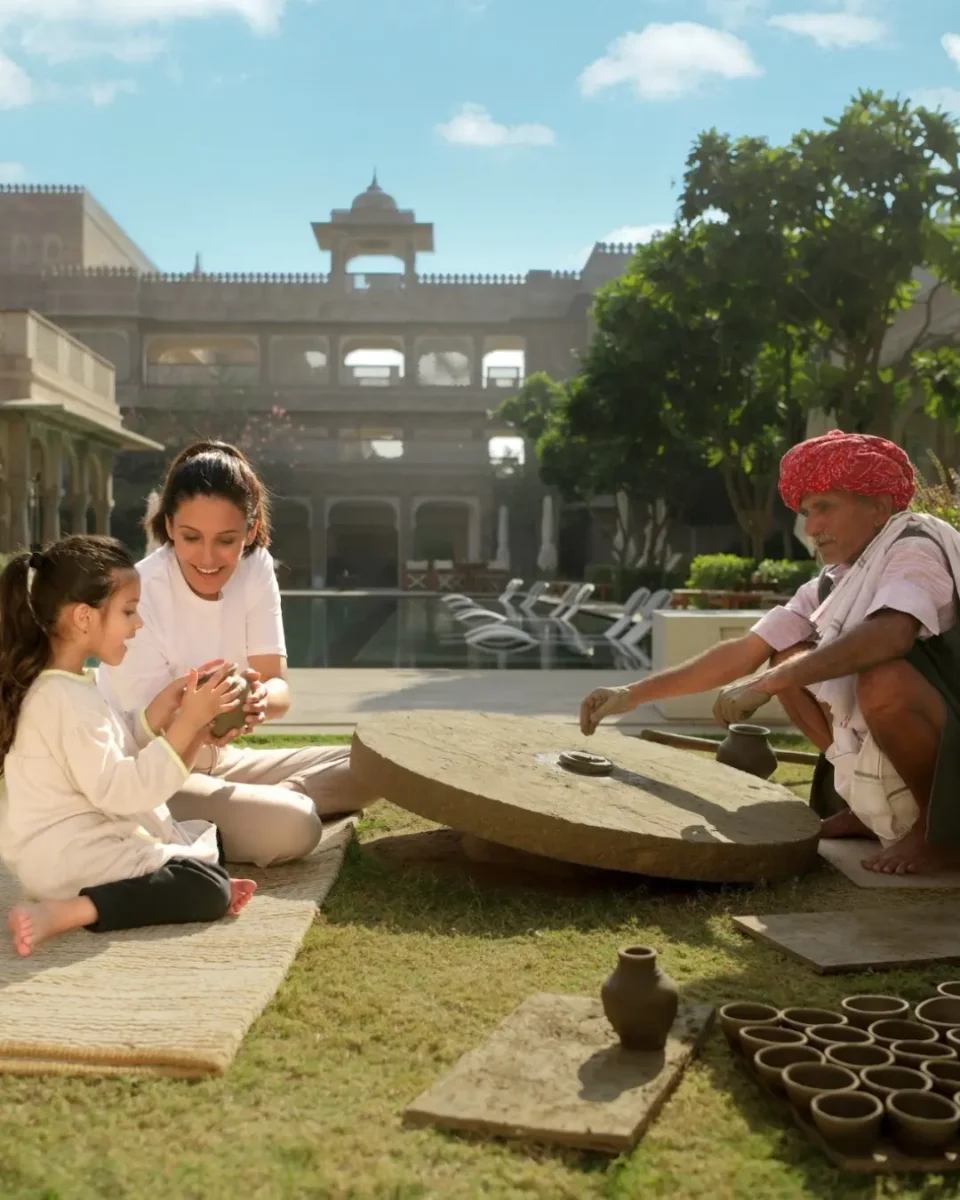
In India, history is served at the dining table as much as it is found within ancient walls. At Six Senses Fort Barwara, families cook regional dishes using traditional earthenware techniques before setting off on treasure hunts through the 14th-century fort. It’s an approach that introduces younger travellers to local history through flavour, storytelling and exploration, making heritage feel tangible rather than distant.

On the private island of Félicité in Seychelles, discovery stretches from sea to soil to stars. At Six Senses Zil Pasyon, children can snorkel among marine life, explore organic gardens, learn Creole cooking traditions and spend evenings stargazing beneath remarkably clear skies. Together, the experiences reveal how island communities are shaped by the natural world around them, connecting food, ecology and culture in ways that are easy for young minds to understand.

For families travelling closer to home, Six Senses AMAALA offers one of the programme’s most regionally significant experiences. Set along Saudi Arabia’s Red Sea coastline, the resort introduces children to the importance of mangrove forests through its Junior Mangrove Ecologist programme. Combined with sustainability workshops, cooking classes and activities at the resort’s Earth Lab, the experience helps young guests understand how these coastal ecosystems protect shorelines, nurture marine life and contribute to climate resilience—an increasingly relevant lesson as environmental awareness grows across the region.
Collectively, these experiences highlight a changing definition of luxury family travel. Rather than designing holidays solely around entertainment, Six Senses is creating opportunities for children to ask questions, solve problems and engage with the places they visit in meaningful ways.
For parents, the appeal goes beyond filling an itinerary. Travel becomes a chance to nurture curiosity, encourage environmental awareness and introduce children to cultures through participation rather than observation. Those lessons often outlast the holiday itself.
As travellers increasingly seek experiences with purpose, Six Senses is demonstrating that luxury isn’t only measured by where a family stays, but by what they discover together. And while every destination offers its own landscapes, traditions and stories, the greatest takeaway may be the curiosity children carry home—long after the luggage has been unpacked.