

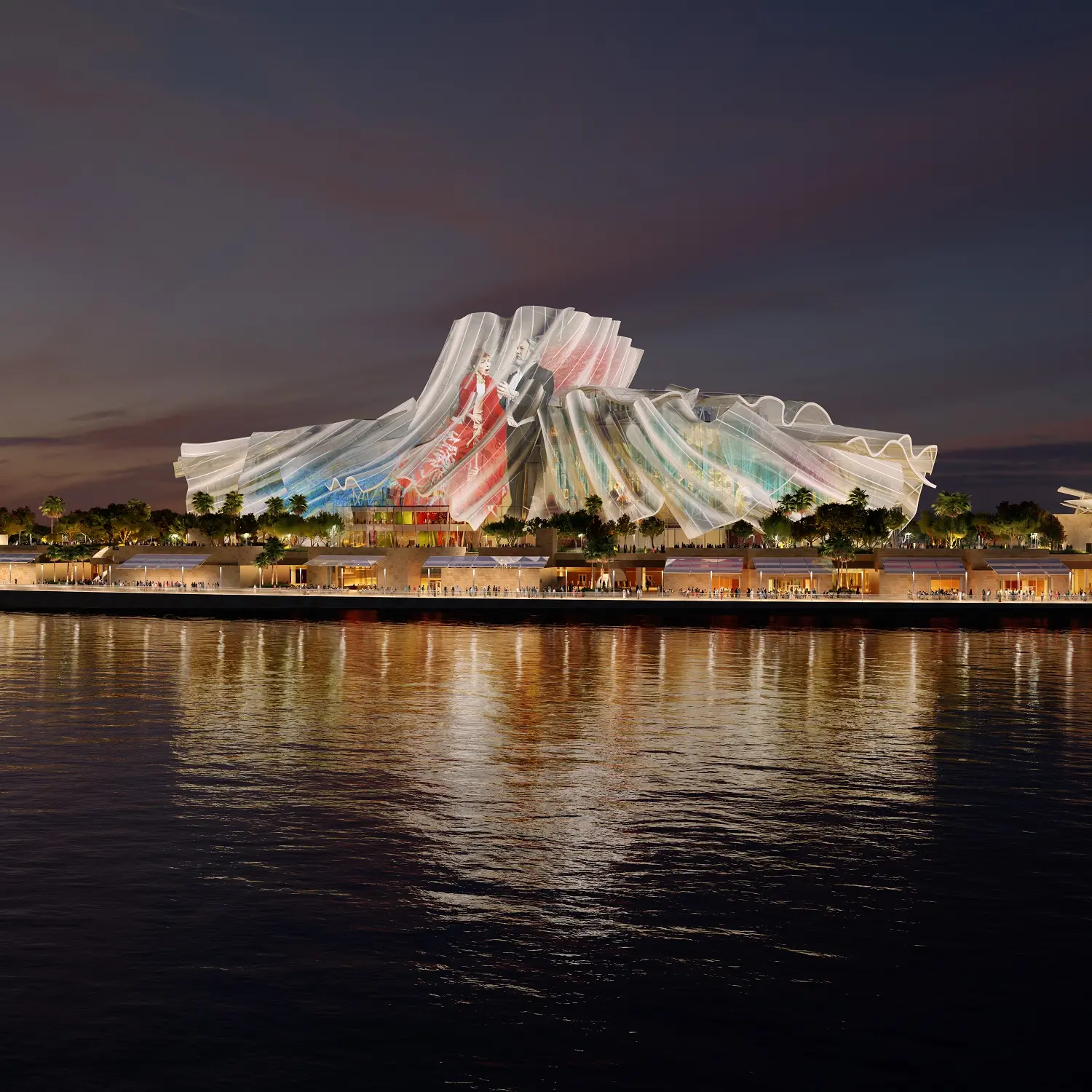
Designed by Frank Gehry and set to open in 2030, Dar al Funoon Abu Dhabi will become one of the Middle East’s largest performing arts centres. From its striking architecture to its role in Abu Dhabi’s cultural vision, here’s everything you need to know about the emirate’s newest landmark.
For more than a decade, Saadiyat Island has become synonymous with museums.
Louvre Abu Dhabi welcomed visitors in 2017. Guggenheim Abu Dhabi is nearing completion. Zayed National Museum and the Natural History Museum Abu Dhabi are preparing to open, while teamLab Phenomena Abu Dhabi has introduced immersive digital art to the district.
Now, Abu Dhabi is turning its attention to another form of culture, not one displayed behind glass, but one experienced live.
The emirate has announced Dar al Funoon Abu Dhabi (House of the Arts), a landmark performing arts institution that will become a permanent home for opera, ballet, theatre, jazz and live music when it opens in 2030.
Here are five reasons why the project matters.

Until now, Saadiyat Cultural District has largely been defined by museums. Dar al Funoon changes that conversation. Rather than focusing on preserving art and history, the institution has been created to celebrate live performance. It represents the next stage of Abu Dhabi’s cultural ambitions by investing in artists, productions and creative collaboration alongside world-class collections. It’s a subtle shift, but an important one. Great cultural cities are remembered not only for their museums, but also for the performances that bring them to life.

The institution has been designed by the late Frank Gehry, one of the world’s most influential architects and the creative mind behind the Guggenheim Museum Bilbao and Walt Disney Concert Hall in Los Angeles. His vision for Dar al Funoon moves away from conventional theatre design. Inspired by flowing fabric, the building appears to ripple across the site, while transparent façades reveal glimpses of rehearsals and artistic activity inside. The result is architecture that reflects movement, creativity and performance before audiences even step through the doors.

Scale is central to the project. Dar al Funoon will feature: A performance hall with more than 2,000 seats, 3,500-seat open-air amphitheatre, 400-seat studio theatre and a dedicated 250-seat jazz venue. Together, the complex will accommodate more than 6,000 visitors, making it one of the region’s most technically advanced venues for live performance. When complete, it will host year-round programming spanning opera, ballet, theatre, orchestral music, jazz and contemporary productions.

While audiences will experience concerts, theatre and dance productions, Dar al Funoon has been designed with a much broader purpose. The institution will support artist residencies, international partnerships, educational initiatives and original co-productions, creating opportunities for artists from the UAE, the wider region and around the world. According to the Department of Culture and Tourism – Abu Dhabi, the project is also expected to strengthen the emirate’s creative economy by generating jobs, developing local talent and attracting cultural tourism. In other words, this is as much an investment in people as it is in architecture.

Already home to Louvre Abu Dhabi and soon to include Guggenheim Abu Dhabi, Zayed National Museum, Natural History Museum Abu Dhabi and teamLab Phenomena Abu Dhabi, Saadiyat Island has established itself as one of the world’s fastest-growing cultural destinations. Dar al Funoon completes another piece of that vision. For visitors travelling from Oman and across the GCC, it means future trips to Abu Dhabi may no longer revolve around museums alone. A weekend itinerary could include an opera performance, an outdoor concert or a jazz evening alongside visits to some of the region’s leading cultural institutions.
Why It Matters
Across the Gulf, investment in culture has accelerated over the past two decades. Much of that focus has centred on museums, heritage sites and destination architecture. Dedicated performing arts institutions on this scale, however, remain comparatively rare.
Dar al Funoon signals that Abu Dhabi’s cultural strategy is evolving. The emirate is investing not only in preserving history but also in creating the conditions for culture to flourish through live performance, artistic exchange and creative collaboration.
Construction is already underway, with the institution scheduled to open in 2030. By then, Abu Dhabi won’t simply have one of the world’s most impressive collections of museums. It will also have a new stage on which its cultural ambitions can continue to grow.