

Oman is a country rich in history and culture. The diverse landscapes, from coastal ruins to vast deserts, offer unique opportunities for exploration. With its UNESCO World Heritage Sites and ongoing archaeological discoveries, Oman provides a captivating glimpse into the region’s past, making it an ideal destination for those passionate about history and the mysteries of ancient cultures.
Here are some of the most significant historical sites that can be found in the country.
Khor Rori: The Ancient Frankincense Hub
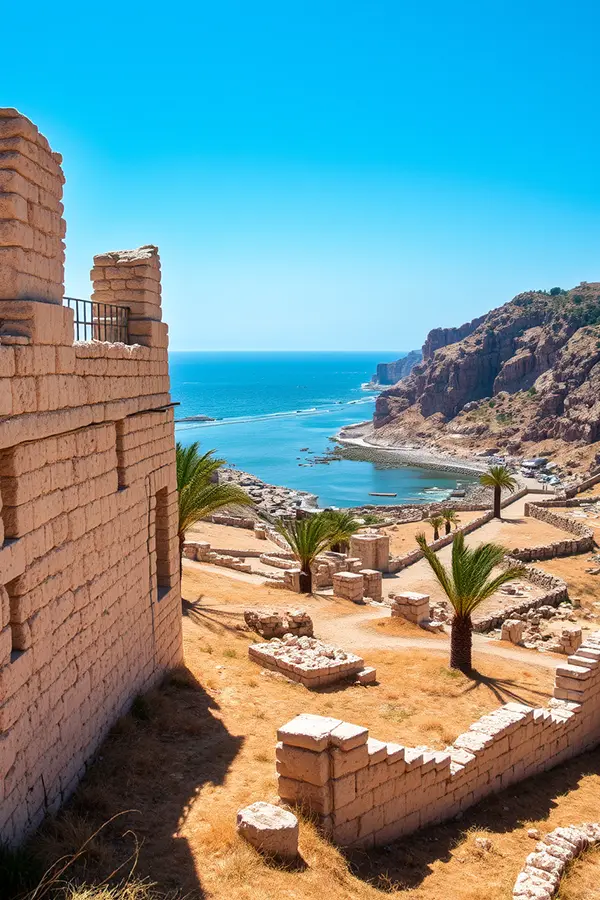
Samharam, also known as Khor Rori, is an ancient archaeological site located near Salalah in Dhofar, Oman. It was once a prominent port city during the pre-Islamic era and played a crucial role in the frankincense trade, which was one of the most valuable commodities of the ancient world.
The port of Khor Rori was part of a larger network that facilitated trade between South Arabia, East Africa, and India. The site contains the ruins of a fortress, residential areas, and storage facilities, indicating its significance as a commercial and maritime hub. It’s also mentioned in some historical sources as a part of the ancient Kingdom of Hadhramaut.
Today, Khor Rori is a UNESCO World Heritage Site and part of the Land of Frankincense, showcasing the rich history of trade and civilization in southern Oman. Its proximity to the sea and strategic location made it a key player in Oman’s cultural and economic history.
Ubar: The Atlantis of the Sands
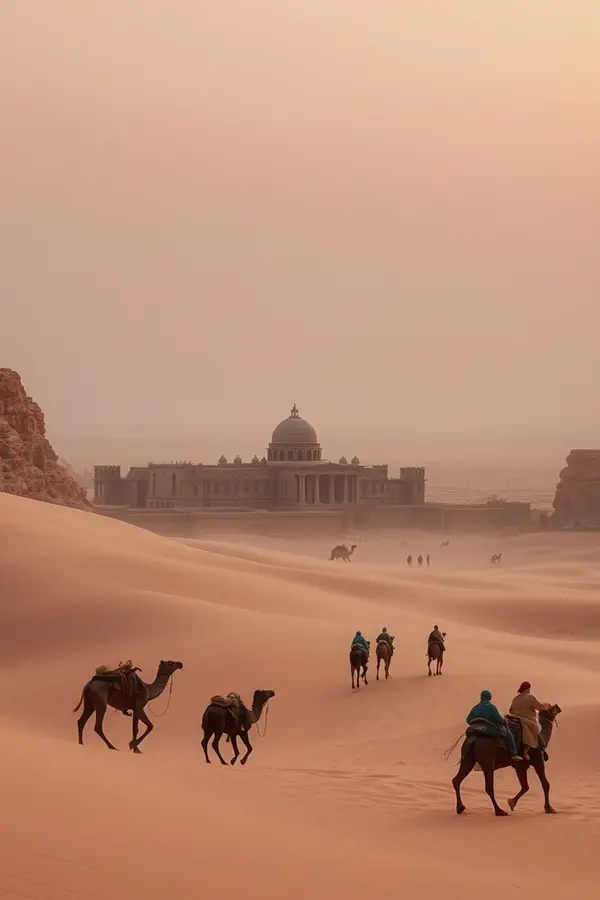
Ubar, often referred to as the “Atlantis of the Sands,” is an ancient, lost city believed to have been located in the desert of southern Oman or in the broader Arabian Peninsula. It is mentioned in ancient texts and legends as a wealthy and prosperous trading hub, particularly known for frankincense.
According to legend, Ubar was a major centre for commerce in Arabia and was ruled by powerful leaders. It eventually disappeared, with some stories attributing its destruction to divine punishment due to the greed and hubris of its inhabitants. Archaeological and historical efforts have attempted to locate Ubar, with one of the most famous discoveries being the ancient city of Shisr in Oman, which some scholars suggest might be the location of the fabled Ubar.
In recent decades, satellite imagery and ground explorations have helped uncover the ruins of what could be ancient trade routes and settlements, adding credence to the idea that Ubar might have been a real city, though its exact nature remains debated.
Salut: Solomon’s Stopover on His Way to the Queen of Sheba
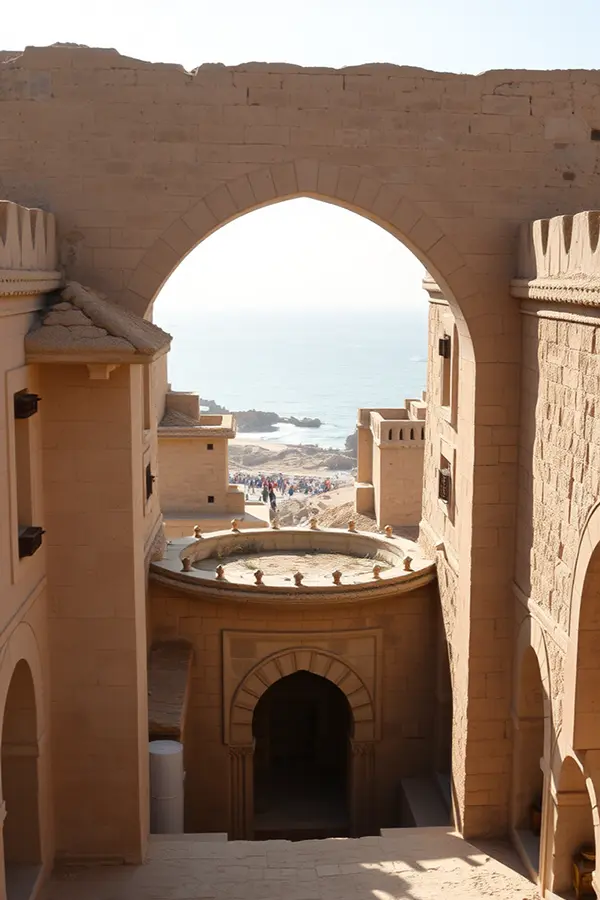
Salut, located near Bahla in Oman, is a site of significant archaeological importance, revealing insights into the region’s rich history. This ancient settlement boasts impressive defensive structures and artefacts dating back to the pre-Islamic and Islamic periods.
Excavations have uncovered a wealth of discoveries, including pottery, coins, and inscriptions, which illuminate the daily lives and social organization of its inhabitants.
Scholars have drawn connections between Salut and various ancient texts, suggesting its relevance to historical trade routes that facilitated the exchange of goods across the Arabian Peninsula.
Although direct archaeological evidence linking King Solomon to the region remains elusive, local traditions and legends hint at the possibility that areas like Salut served as stopovers for traders during his reign. This speculation aligns with historical accounts that highlight the significance of Oman as a vital trade hub in antiquity, particularly for valuable commodities such as frankincense.
The nearby Bahla Fort, a UNESCO World Heritage site, further underscores the strategic importance of this region throughout history. Together, Salut and Bahla provide a compelling narrative of Oman’s role in ancient trade networks and its cultural exchanges, contributing to a deeper understanding of the area’s historical significance.

Qalhat: The Fortress by the Sea
Qalhat is an ancient town located on the southeastern coast of Oman, near the city of Sur, and it holds significant historical relevance for several reasons. During the medieval period, particularly in the 13th and 14th centuries, Qalhat served as an important trading center, playing a crucial role in the maritime trade routes that connected Oman with the East African coast, India, and beyond. This facilitated the exchange of goods such as frankincense, spices, and textiles, establishing Qalhat as a thriving port city.
As a melting pot of various cultures and civilizations, Qalhat contributed to the dissemination of Islamic culture and practices throughout the region. The town is home to several historically significant structures, including ancient mosques, forts, and houses that showcase Islamic architecture. Notable among these is the tomb of Bint al-Nabiyah, believed to be the burial site of a member of the Omani royal family, reflecting the architectural style of the period.
Recognizing its cultural and historical importance, Qalhat was designated a UNESCO World Heritage Site in 2010, which helps preserve the site and promotes awareness of its historical significance. Additionally, archaeological excavations in and around Qalhat have revealed artifacts and structures that provide valuable insights into the region’s history, trade networks, and cultural interactions, making it a vital site for archaeological research. Overall, Qalhat’s historical relevance lies in its role as a trade hub, its architectural heritage, and its contributions to the cultural landscape of the Arabian Peninsula and beyond.
The Stonehenge of Oman
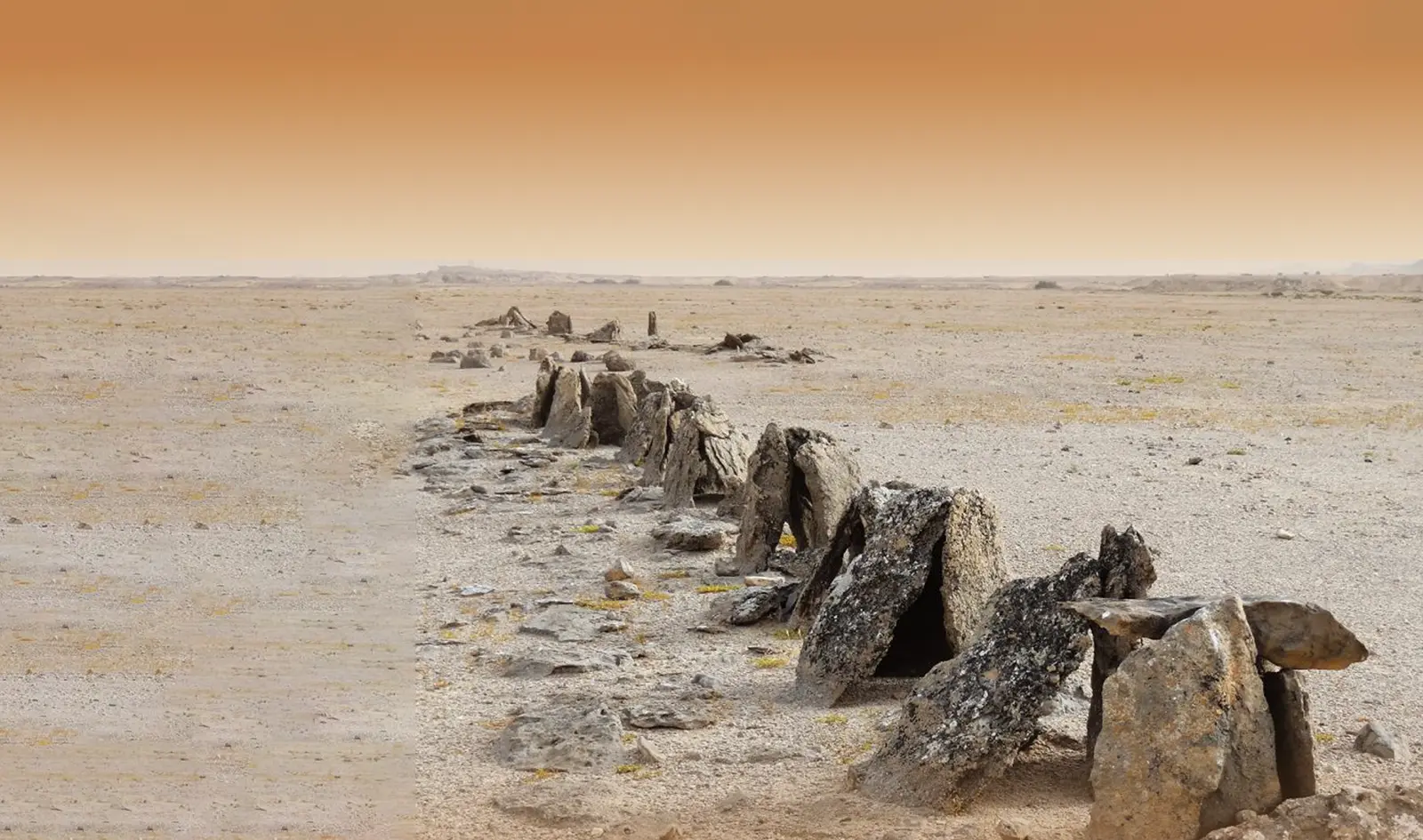
The “Stonehenge of Oman,” discovered during a 2023 excavation in the Dhofar Governorate, is a remarkable archaeological site featuring ancient trilith structures—groups of three flat standing stones that form a pyramid. Dating back approximately 2,000 years, these ritual monuments share similarities with England’s Stonehenge, though their exact purpose and the identity of their builders remain unknown.
The excavation, conducted by an international team from the Czech Academy of Sciences, also unearthed stone axes dating from 300,000 to 1.3 million years ago, along with fossils, eggshells from extinct ostriches, and evidence of an ancient riverbed. These findings suggest that Arabia served as a key migration route from Africa into Eurasia, influenced by historical climate changes that alternated between arid and wetter periods.
Additionally, a second site in Duqm revealed a megalithic structure concealing burial chambers with skeletal remains, along with rock engravings that document human habitation from 5,000 B.C. to 1,000 A.D. Together, these excavations contribute to a broader understanding of the cultural and migratory patterns in southern Arabia, reflecting the interactions between African and Arab archaeological cultures and their adaptation to changing environments.
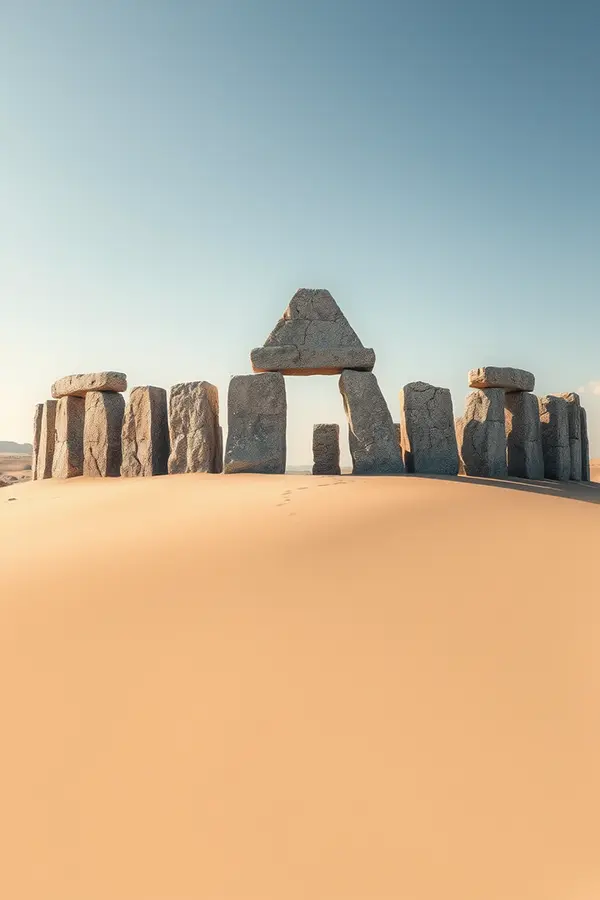
[The images presented here are AI-generated and represent a preliminary interpretation based on historical descriptions provided by scientists and archaeologists.]